

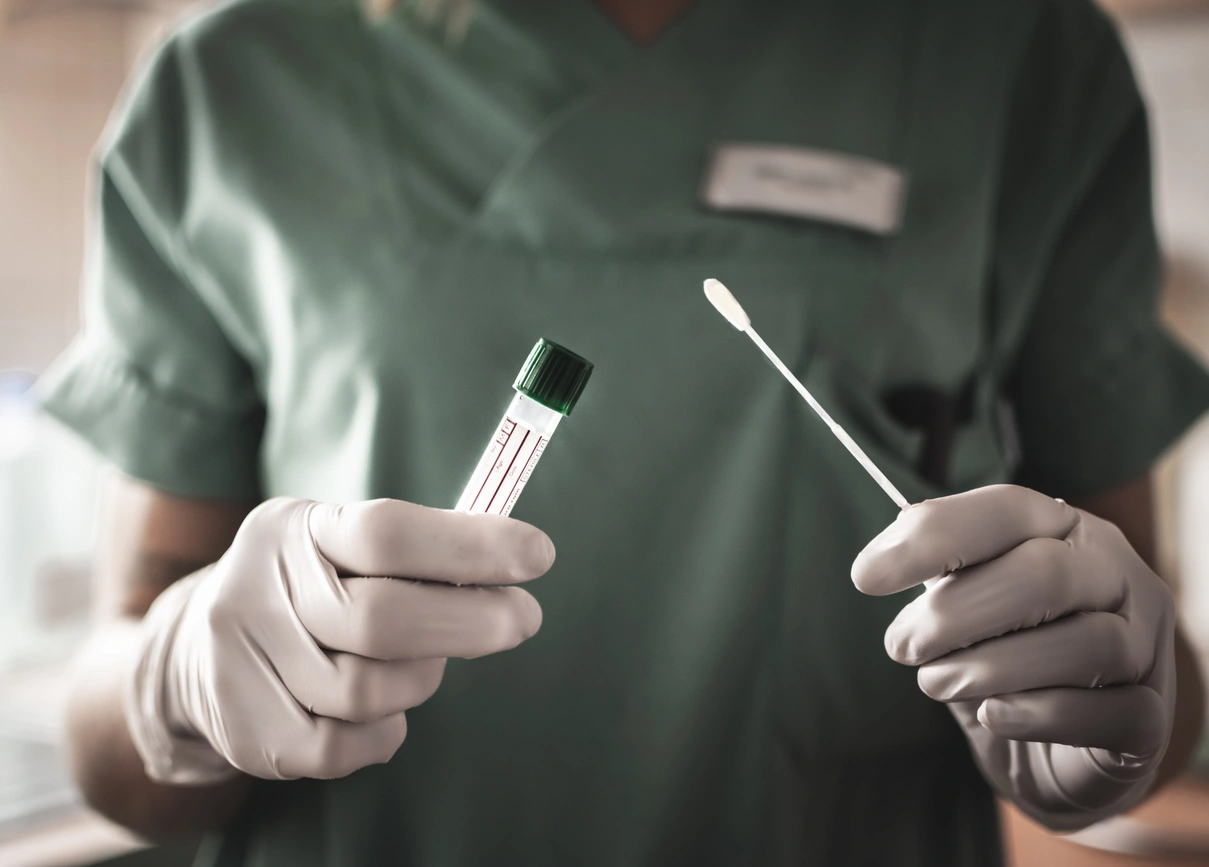



In recent years, medical practices have increasingly seen patients who report persistent symptoms even months after a Covid infection or after vaccination. These range from chronic fatigue, concentration problems and exercise intolerance to muscle and joint pain, neurological symptoms or circulatory issues. The terms Post-Covid, Long-Covid and Post-Vac syndrome describe different constellations of such persistent symptoms.
While the clinical symptoms are now well described, the underlying pathophysiology remains the subject of intensive research. One possible immunological mechanism that is also receiving increasing attention at the Praxis Schleicher in Munich concerns the strong activation and imprinting of the humoral immune system, particularly B cells.
During an infection or vaccination, the immune system is trained to recognize the pathogen again. B cells produce antibodies that specifically bind to components of the virus. This principle is generally desirable and protects against severe disease courses.
In some individuals, however, a particularly strong immunological imprinting of B cells appears to occur. As a result, renewed contact with viral antigens — for example during a later infection — can lead to very intensive antibody production.
These antibodies bind to viral components or antigen fragments and form so-called immune complexes.
Under normal circumstances, such immune complexes are efficiently removed by the immune system. The complement system, macrophages as well as the filtering function of the liver and spleen play a key role in this process.
However, if very large quantities of immune complexes are formed, the physiological clearance system may become overloaded.
If immune complexes remain in the body, they can deposit in smaller blood vessels or tissues. This can trigger various processes:
Small vessels and capillaries are particularly sensitive to such processes. Impaired microcirculation may help explain why many affected individuals develop symptoms involving multiple organ systems.
The resulting symptoms can be very diverse and often affect several organ systems simultaneously:
Many of these symptoms can partly be understood as manifestations of chronic low-grade inflammatory activity and impaired microcirculation.
From this immunological perspective, several therapeutic approaches emerge. The aim is to support the organism in reducing the burden caused by immune complexes while simultaneously improving the regulatory capacity of the immune system.
Support of detoxification organs
An important step is supporting the physiological detoxification and elimination pathways. These include in particular the liver, kidneys, lymphatic system and intestines.
Improvement of microcirculation
Since many symptoms may be related to impaired blood flow in the smallest vessels, improving microcirculation plays a central role. This can be achieved through certain oral therapeutic strategies, among other approaches.
Activation of the innate immune system
The breakdown of immune complexes largely occurs through macrophages, the scavenger cells of the immune system. Therapeutic strategies may aim to support these natural clearance mechanisms.
Regulation of the oxidative and metabolic environment
Chronic inflammatory processes are often associated with increased oxidative stress and shifts in metabolic balance. Infusion therapies that stabilize the redox system and support metabolism can play an important role here.
Systemic regulatory therapies
Another approach is to improve tissue oxygenation through specific infusion therapies while also utilizing immunomodulatory effects.
Promotion of the natural breakdown of immune complexes
Enzymatic processes within the body are also involved in dissolving and eliminating immune complexes.
Therapeutic plasma exchange
In severe or therapy-resistant cases, therapeutic plasma exchange may also be considered. In this procedure, circulating inflammatory factors and immune complexes are directly removed from the blood.
The treatment of Post-Covid, Long-Covid or Post-Vac syndromes often requires an individually tailored therapy concept. It is essential to consider not only immunological processes but also metabolism, circulation and the body’s regulatory mechanisms.
An integrative approach that combines conventional medical knowledge with regulatory and supportive therapies may open new perspectives here.
As research on these conditions continues to evolve, an open and scientifically oriented approach remains particularly important. Ultimately, the goal of any therapy is to strengthen the organism’s capacity for self-regulation and to create the conditions for sustainable recovery.
March 13, 2026